
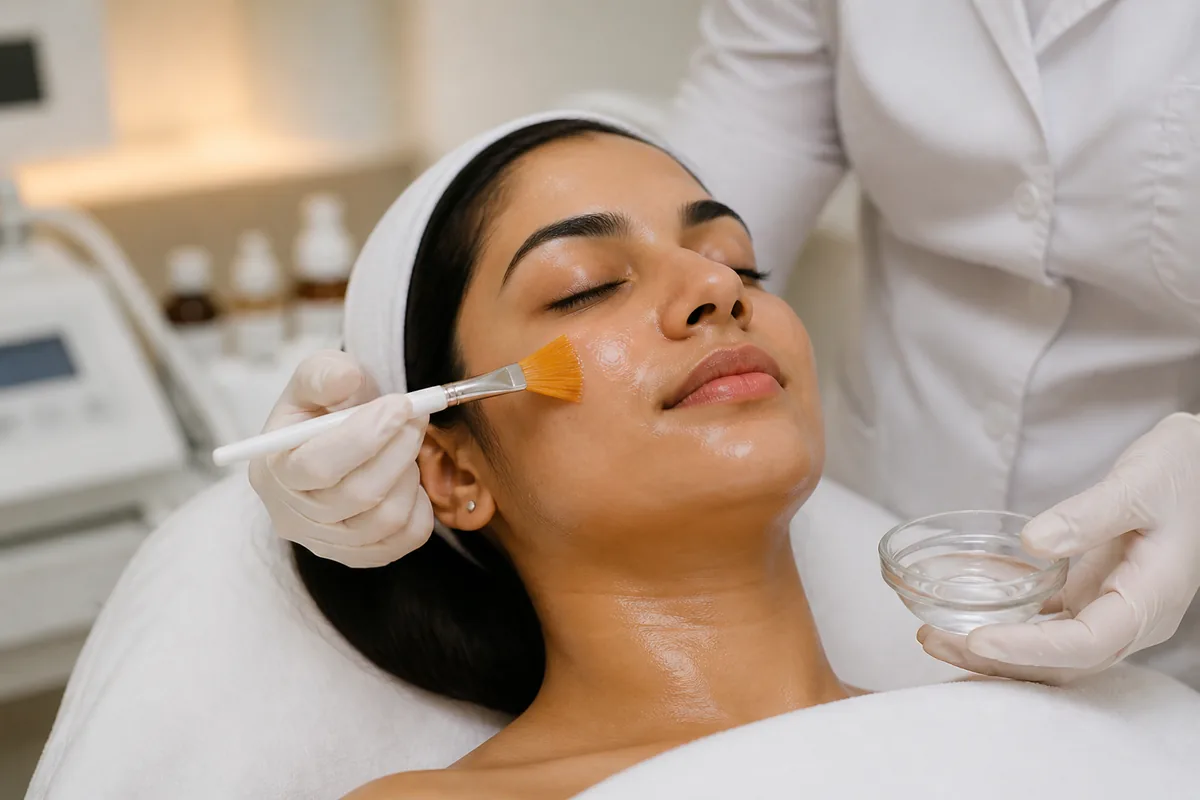
Chemical Peel Types: Glycolic vs Salicylic vs TCA — Which One Do You Need?
Searching for the right chemical peel type in Hyderabad? Glycolic, salicylic and TCA peels are often marketed as interchangeable glow treatments — they are not. According to Dr Divya Banswada MBBS, MD, Dermatologist at Skin N U Clinics, Kokapet, peel choice depends on your skin concern, Fitzpatrick type, barrier health and how much downtime you can manage.
What Is a Chemical Peel?
A chemical peel uses controlled acids to exfoliate outer skin layers so newer skin can show through. Depth ranges from very superficial to medium. At Skin N U Clinics on Golden Mile Road, Kokapet, peels are planned after examination — not as a walk-in spa package — because Indian skin (often Fitzpatrick IV–V) needs pigment-safe protocols and strict sunscreen.
Explore clinic options under chemical & professional peels and related face & skin rejuvenation care.
Glycolic Acid Peels (AHA)
Glycolic acid is a water-soluble alpha-hydroxy acid derived from sugar cane. It helps with dullness, uneven texture and mild photoageing by loosening surface bonds. It can improve glow and fine roughness when used at appropriate percentages with spacing.
- Best for: Congestion-free dull skin, early texture change, maintenance glow plans.
- Watch for: Sensitivity, active dermatitis, recent aggressive actives (retinoids, strong acids at home).
- Hyderabad tip: Post-monsoon humidity + pollution still demand barrier repair and SPF — peels without sunscreen undo results.
Salicylic Acid Peels (BHA)
Salicylic acid is oil-soluble, so it penetrates sebum-filled pores. It is a frequent choice for comedonal acne, oily T-zones and clogged pores common in west Hyderabad office lifestyles (AC + commute sweat).
- Best for: Acne-prone and oily skin, blackheads, pore congestion.
- Often paired with: Medical acne plans — see advanced acne control.
- Not alone enough for: Deep cystic nodules, hormonal acne needing systemic therapy, or scarring that needs energy devices.
TCA Peels (Trichloroacetic Acid)
TCA can reach deeper layers than typical glycolic/salicylic spa strengths. It may be considered for selected pigmentation, texture and scar concerns — but depth must be conservative on Indian skin to reduce PIH (post-inflammatory hyperpigmentation) risk.
TCA is not a first peel for everyone. Priming with sunscreen and pigment-safe topicals, then careful titration, is safer than chasing a dramatic one-session peel before a wedding.
Glycolic vs Salicylic vs TCA: Side-by-Side
- Glycolic: Surface glow & texture; water-soluble AHA.
- Salicylic: Pores & acne oiliness; oil-soluble BHA.
- TCA: Deeper selected concerns; higher skill and aftercare demand.
- Shared rule: Diagnosis first; avoid stacking with harsh DIY acid nights; no peel on infected or broken skin.
How Dermatologists Choose in Kokapet & Hyderabad
Dr Divya Banswada assesses acne activity, melasma risk, barrier damage from over-exfoliation, medicines you use, and event timelines. Patients from Gachibowli, Financial District, Narsingi and Manikonda often ask for “the strongest peel” — stronger is not always better if pigment flares.
Peels may be sequenced with laser toning, microneedling, or facials only when medically appropriate — never all at once without a plan.
Aftercare That Protects Results
Expect mild redness or flaking depending on depth. Use gentle cleanser, bland moisturiser, and broad-spectrum sunscreen. Pause retinoids and harsh scrubs as advised. Avoid saunas, heavy workouts that soak the face, and unprescribed fairness creams.
Professional insight from Dr Divya Banswada: “Name the peel for the problem — glycolic for dullness, salicylic for oily acne pores, TCA only when depth is justified. On Indian skin, pigment safety beats a viral after photo.”
Frequently Asked Questions
Conclusion
Chemical peel types are tools, not trends. At Skin N U Clinics, Kokapet, peels are matched to diagnosis with GEO-aware care for Hyderabad weather and Indian skin tones.
Ready for a peel assessment? Book with Dr Divya Banswada.
Phone: 91003 33255 · Address: Skin n u clinics, 4th Floor, MN Corner, Golden Mile Road, Kokapet
Medical disclaimer: This content is for educational purposes only and should not replace medical consultation. Please contact your doctor for personalised advice.